
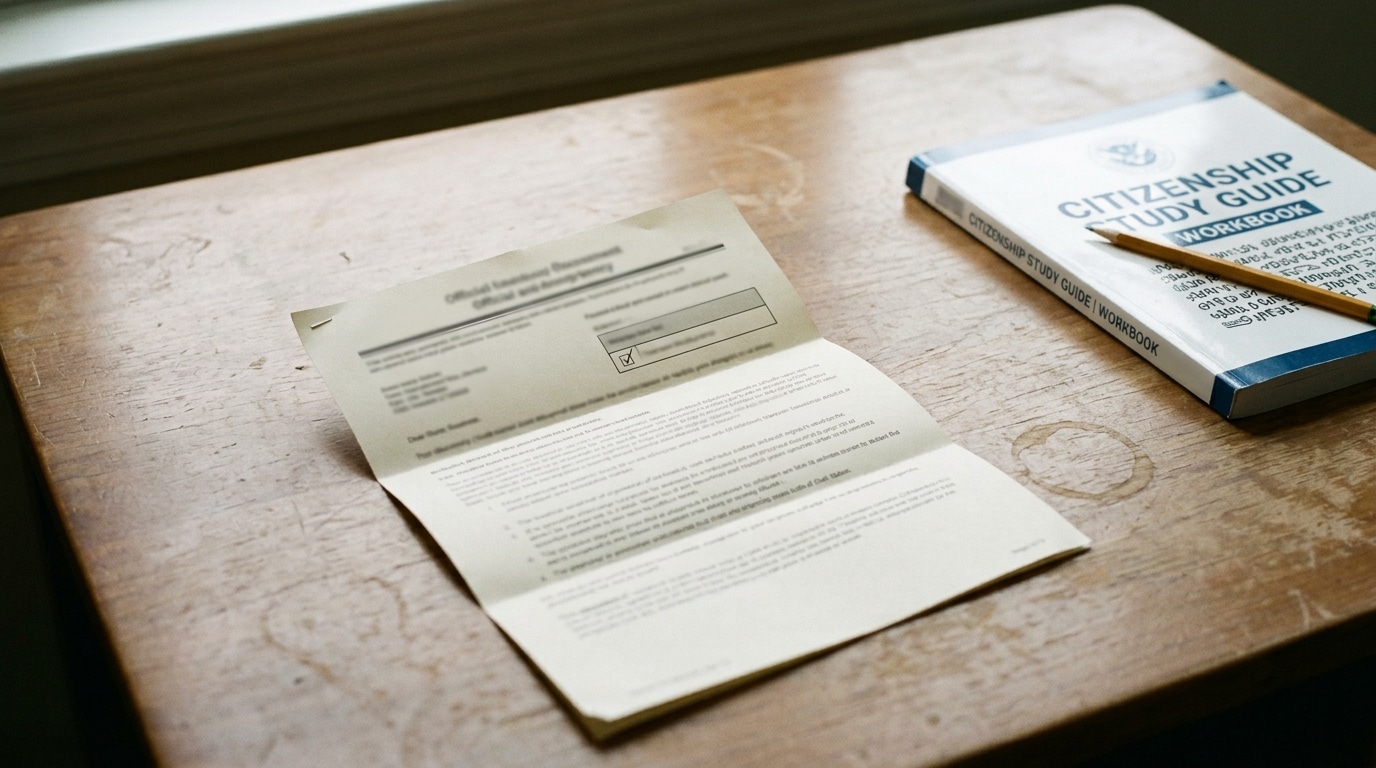
Walking out of your naturalization interview after failing part of the test is a discouraging feeling, especially after everything it took to get to that appointment. If this just happened to you, or you’re worried it might, here’s what matters most: failing the citizenship test does not end your path to becoming a U.S. citizen. USCIS has a clear, predictable process for exactly this situation, and understanding it now can turn a stressful moment into a manageable next step.
This guide explains what actually gets retested, how much time you have to prepare, and what happens in the rare case that a second attempt doesn’t go well either.
What the Citizenship Test Actually Covers
Before getting into what happens after a failed attempt, it helps to understand that the naturalization test isn’t one single pass-or-fail moment. It’s made up of four separately scored components:
| Component | What It Measures |
| Civics | Your knowledge of U.S. history and government, tested through spoken questions |
| English Reading | Your ability to read a sentence aloud correctly |
| English Writing | Your ability to write a sentence that’s read to you |
| English Speaking | Your ability to answer questions about your N-400 application in English during the interview |
You only need to fail one of these to receive a “continued” decision rather than an approval that day, but here’s the important part: USCIS only retests you on the specific component you failed. If you passed civics but struggled with English writing, your second interview covers English writing only, not the entire test over again.
Your Second Chance: How the Retest Works
If you fail any portion of the test at your initial interview, USCIS schedules a second interview, generally 60 to 90 days later. That window exists specifically to give you real time to prepare, not as a formality, so it’s worth treating it seriously rather than assuming the second attempt is a rubber stamp.
A few things to know about this process:
- You get two total attempts at each component. The retest is your second and final try at whatever you failed the first time.
- USCIS schedules it for you. You don’t need to request the second interview yourself; a notice will be mailed with your new date.
- Your immigration status doesn’t change in the meantime. You remain a lawful permanent resident with your green card intact while you wait for your second interview.
- Showing up matters. If you don’t appear for your rescheduled interview without notifying USCIS in advance, your application will likely be denied. If a genuine emergency prevents you from attending, contact USCIS as soon as possible, since exceptions are sometimes made for documented medical issues or similar circumstances.
What Happens If You Fail the Same Component Twice
If you fail the identical component again at your second interview, USCIS denies your Form N-400. This is a real outcome with real consequences, but it is important to understand what it does and doesn’t mean.
It does not affect your green card. A citizenship denial based solely on failing the test does not put your lawful permanent resident status at risk. You remain exactly where you were before you applied, a green card holder.
It is not a permanent bar. Unlike some of the good moral character issues we cover in our guide on why citizenship applications get denied, failing the test simply means this particular application didn’t succeed. There is no limit under USCIS policy to how many times you can apply for naturalization.
You’ll need to start over. Moving forward means filing a brand new Form N-400 and paying the filing fee again. This restarts the process from the beginning, including a new background check and a new interview, so it’s worth using the time before you refile to prepare thoroughly.
The 2025 Civics Test Change
If you’re preparing for your interview now, make sure you’re studying the right version of the test. Applicants who filed Form N-400 before October 20, 2025 study the original 100-question civics test. Applicants who filed on or after that date study the updated 2025 version, which expands the question bank and adjusts how the test is administered. Studying from the wrong list wastes valuable preparation time, so confirm which version applies to your filing date directly through the official USCIS civics test resources before your interview.
There is one notable exception. Applicants who are 65 or older and have held a green card for 20 years or more study a shorter list of just 20 civics questions and only need to answer 6 out of 10 correctly. This group, along with applicants who qualify under the age 50/20 or age 55/15 rules, may also take the civics test in their native language with their own interpreter rather than in English.
The Good News: Most People Pass
It’s worth keeping the odds in perspective. The overwhelming majority of applicants pass the naturalization test, and civics in particular has a strong first-attempt pass rate. Failing on your first try is far from the norm, and it’s usually a sign that a specific area, often English speaking or writing under interview pressure, needs a bit more focused practice rather than a sign of a deeper problem.
How to Make the Most of Your Retest Window
The 60 to 90 days before your second interview matter enormously. A few ways to use that time well:
- Study every civics question, not just the ones you missed. Officers draw a different set of questions each time, so knowing the full list is the only reliable approach.
- Practice English out loud daily, especially if reading, writing, or speaking was your weak point. Reading a sentence aloud correctly and writing one down are skills that improve quickly with short, consistent practice.
- Do mock interviews, ideally with someone who can play the role of the officer, asking questions out of order the way the real interview does.
- Use free resources. USCIS offers study materials directly on its website, and many public libraries and community organizations run no-cost citizenship preparation classes.
- Consider legal guidance if something beyond the test itself is unclear. An attorney can’t teach you English or civics, but if you’re confused about why you received a “continued” decision, or whether other issues in your case need attention, that’s worth a conversation before your second interview.
We’re Here If You Need Support
Failing a portion of your citizenship test is stressful, but it’s a solvable problem with a clear process attached to it. At The Law Offices of Shirley Sadjadi, we help clients across Elgin and the greater Chicago area understand exactly where they stand after a naturalization interview, whether that means preparing confidently for a scheduled retest or filing a new N-400 after a denial. Our entire staff speaks both Spanish and English, and we’re glad to help however we can as you work toward your second attempt.
Call 847-595-5338 if you have questions about your citizenship interview or need guidance on your next steps.
Frequently Asked Questions
What happens if I fail part of the citizenship test? USCIS schedules a second interview, generally 60 to 90 days later, retesting you only on the specific component you failed. Your green card and lawful permanent resident status are unaffected while you wait.
Do I have to retake the entire test if I fail one part? No. USCIS only retests the specific component you failed, whether that’s civics, English reading, English writing, or English speaking. Anything you already passed doesn’t need to be repeated.
What happens if I fail the same section twice? USCIS will deny your Form N-400. This does not affect your green card, and there’s no limit to how many times you can reapply for naturalization, but you will need to file a new application and pay the filing fee again.
Which civics test should I study for? It depends on when you filed. Applicants who filed before October 20, 2025 study the original 100-question test. Those who filed on or after that date study the updated 2025 version.
Do I have to take the test in English? Most applicants do, but exceptions exist. Applicants 65 or older with 20+ years as a green card holder study a shorter 20-question list, and certain older, long-term residents may take the civics test in their native language with an interpreter.
Can I skip my retest interview if I’m not ready? Not without consequences. Failing to appear without notifying USCIS in advance generally results in a denial. If a genuine emergency comes up, contact USCIS as soon as possible, since exceptions are sometimes made for documented circumstances.